

Private Limited Company Registration in India – Complete Guide for Business Owners
 CA Vishal Vaghasiya
Introduction
Starting a business with long-term vision requires the right legal structure. A Private Limited Company (Pvt Ltd) is one of the most preferred forms of business in India for startups, growing MSMEs, and companies planning funding or expansion.
This blog explains what a Private Limited Company is, its benefits, registration process, compliances, and common mistakes, in simple terms.
What is a Private Limited Company?
A Private Limited Company is a separate legal entity registered under the Companies Act, 2013, where:
- Liability of shareholders is limited
- Ownership is divided into shares
- Business has higher credibility with banks, investors, and customers
Key Benefits of Private Limited Company
✔ Separate legal identity
✔ Limited liability protection
✔ Easy to raise funds & loans
✔ Higher credibility & brand value
✔ Easy ownership transfer
✔ Suitable for startup & scalable businesses
Who Should Choose a Private Limited Company?
- Startups planning venture capital or angel funding
- Manufacturing & trading businesses
- Businesses targeting bank loans & subsidies
- Family businesses planning future succession
- Businesses with turnover growth plans
Minimum Requirements
- Minimum 2 Directors
- Minimum 2 Shareholders
- One registered office address
- DSC & DIN for directors
Step-by-Step Registration Process
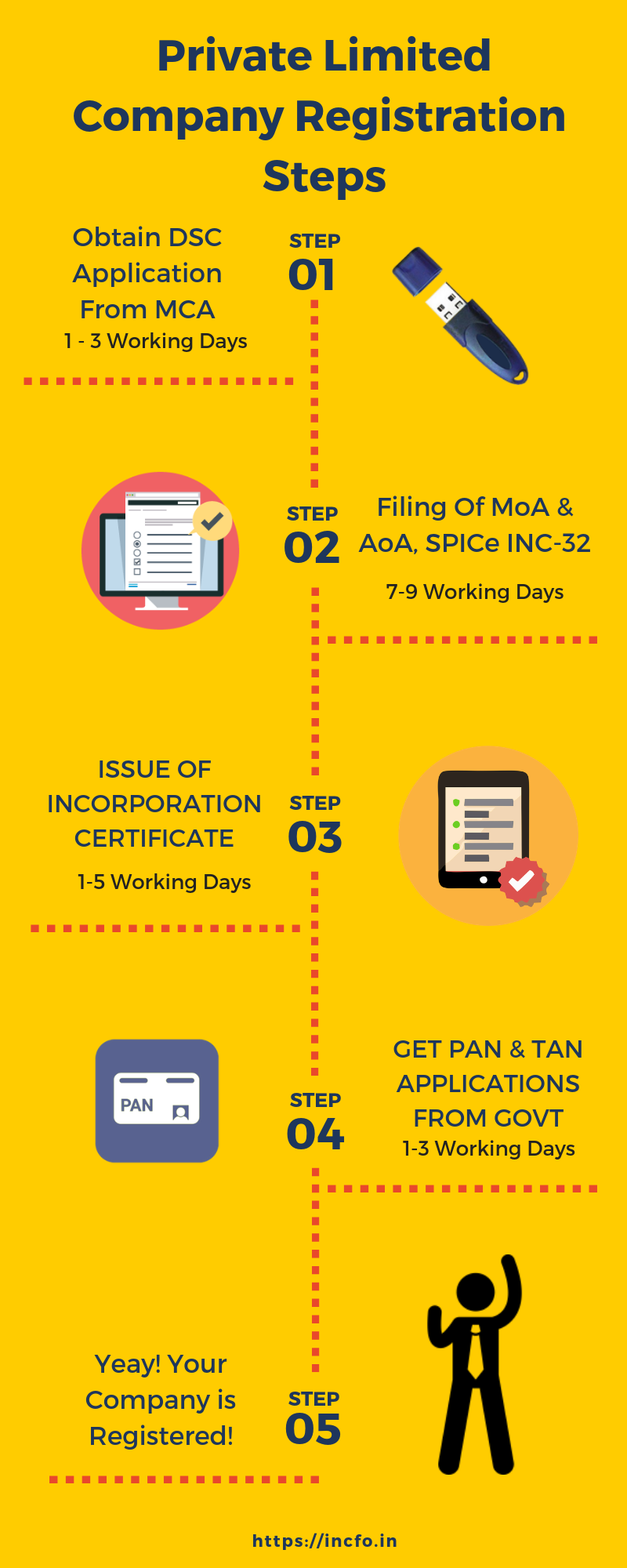
1️⃣ Obtain Digital Signature (DSC)
2️⃣ Apply for Director Identification Number (DIN)
3️⃣ Name approval through MCA
4️⃣ Draft MOA & AOA
5️⃣ Certificate of Incorporation issued
⏱️ Time required: 7–10 working days (subject to approvals)
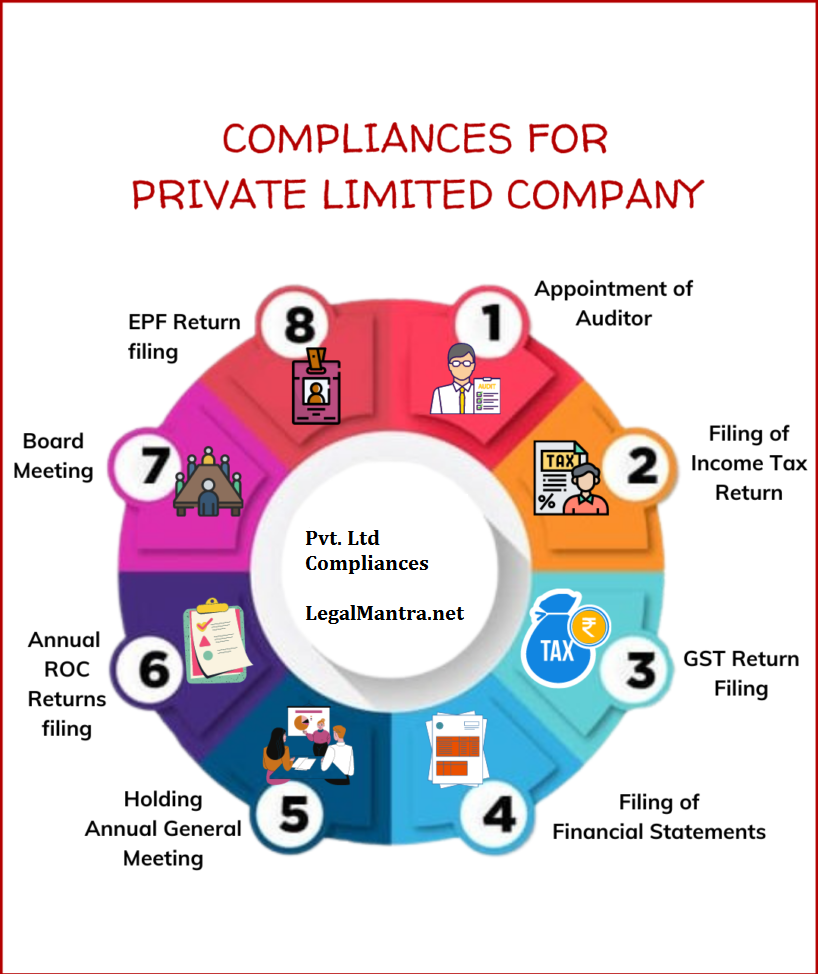
Post-Registration Compliances
- GST Registration (if applicable)
- Bank account opening
- Statutory registers
- ROC filings (AOC-4, MGT-7)
- Income Tax & TDS compliances
Common Mistakes to Avoid
❌ Selecting wrong shareholding pattern
❌ Ignoring future funding needs
❌ Non-maintenance of compliance calendar
❌ Improper object clause drafting